
George was admitted to the hospital on Wednesday, October 18. He woke up that morning with an almost debilitating back ache. The pain was in the center of his mid-back and made working a challenge. He could not get comfortable in his chair and it hurt to make pretty much any movement. Because of the stress and nervousness over his hospitalization he was already under, it felt like this back pain was just piling on and was one more thing that was going wrong and it reduced George to tears. It was pretty awful to watch. More awful to feel, I’m sure! He did manage to make it through the day and after he finished work, we packed up and headed to the hospital.
George is back on the 14th floor of the Pavilion where he had his bone marrow transplant in July of 2022. He told the nursing staff about his back pain – it was so bad that he had trouble getting in and out of the bed. So the doctors ordered an x-ray. They didn’t see anything on that, especially since you can’t see any soft tissue. So they ordered an MRI. Meanwhile, George was given flexeril (muscle relaxer) and oxycodone for the pain. Neither of those did much to help the pain. Oddly enough, he seemed to get some relief from lidocaine patches on his back!

George’s chemo treatment was put on hold until the doctors could be sure that his back wasn’t going to be a problem. The results from the MRI showed some type of “enhancement” on his spine which caused concern that it may be AML. So, they ordered a spinal puncture to look at his spinal fluid to make sure there wasn’t any leukemia in there. It was a tense 36 hours waiting for those results! Finally, we were told that his spinal fluid was leukemia free and that they could proceed with the clinical trial. Whew!
They started his chemo back up and on Wednesday, Oct 25 ( 2 days late) he received his manufactured CAR-T cells.
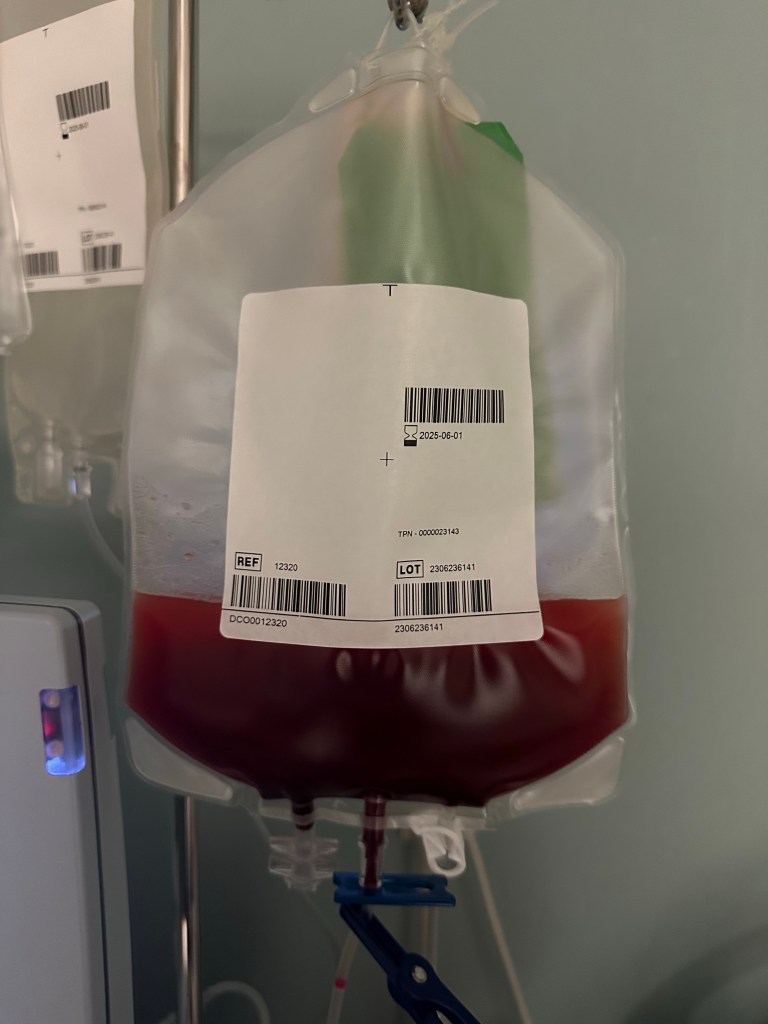
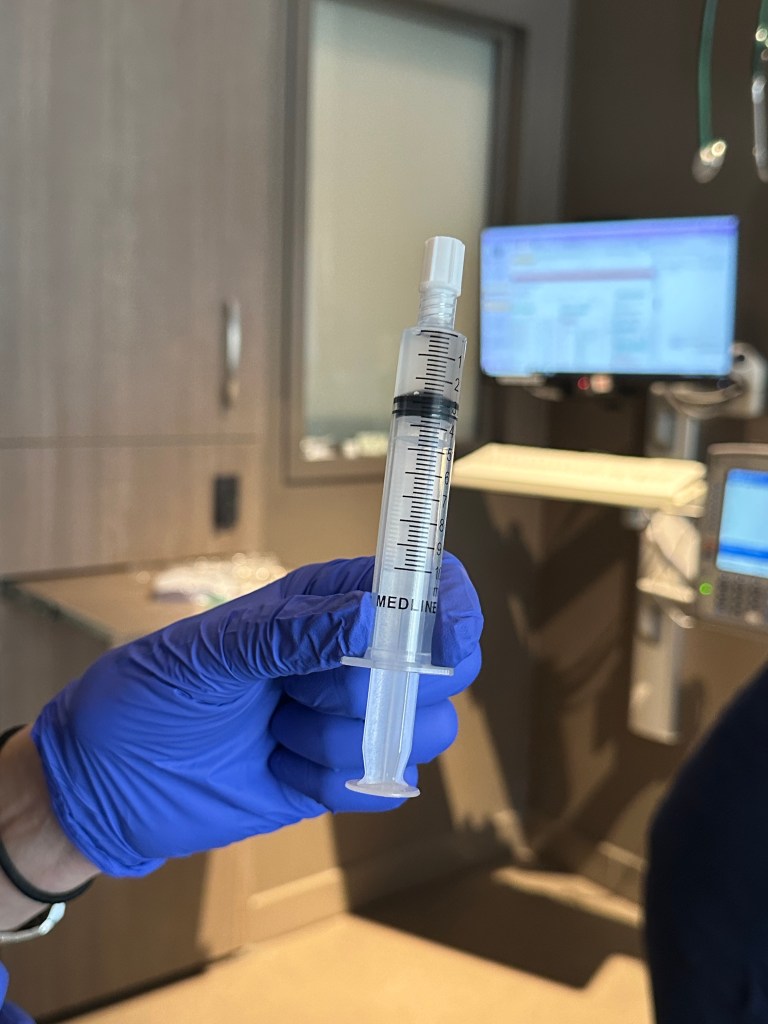

Now, George will be monitored closely for symptoms of Cytokine-Release Syndrome (CRS). This potentially serious side effect is frequently associated with CAR T-cell therapy. Cytokines (chemical messengers that help the T cells carry out their functions) are produced when the CAR T cells multiply in the body and kill the cancer cells. CRS symptoms can range from mild flulike symptoms which include:
- Nausea
- Fatigue
- Headache
- Chills
- Fever
The symptoms of CRS can also be more serious such as
- Low blood pressure
- Tachycardia (abnormally rapid heart rate)
- Capillary leakage (fluid and proteins leaking out of tiny blood vessels and flowing into surrounding tissues, resulting in dangerously low blood pressure)
- Cardiac arrest
- Cardiac arrhythmias
- Cardiac failure
- Hemophagocytic lymphohistiocytosis (life-threatening immune system activation)/macrophage activation syndrome (life-threatening activation of macrophages) (HLH/MAS)
- Hypoxia (lack of oxygen reaching the tissue)
- Renal insufficiency (poor function of the kidneys)
- Poor lung oxygenation
- Multiple organ failure
- Neurological symptoms
The research team and the oncologists will be checking George every few hours and monitoring him closely for any signs of side effects, for which they have treatment ready to go!
As usual, George has insisted on working while in the hospital. It is a wonderful distraction, gives some structure to his day and provides him with a purpose while stuck in his room.

I have been driving to Philadelphia every day to visit George, but took yesterday off to get some errands done, one being getting George’s car inspected. I will be back today though.
I think this is enough info for one post! We are taking things one day at a time and so far, George is doing well! Thank you for your support! It means so much. See you in the next update!

 Diagnosis: Acute Myeloid Leukemia (AML). A Journey
Leave a reply to ahensley66 Cancel reply